Visiting an Embera Village: What Happens and Who Benefits
A visit to an Embera village on the Chagres: the welcome, the talk, lunch, dances, crafts and jagua, who the Embera are and where the money goes.
A visit to an Embera village is two to three hours with a community that lives on the Chagres River: a welcome with music as the canoe lands, a talk about how the Embera live, a lunch of fried fish and plantain, dances, and time at the families’ craft tables, where you can also have a jagua design painted on your skin. Jhaline Tours’ day goes to a named village, the Emberá Tusipono community, from $42 in current promotion (usually $60) a person (checked November 2026), plus a US$35 community fee in cash.
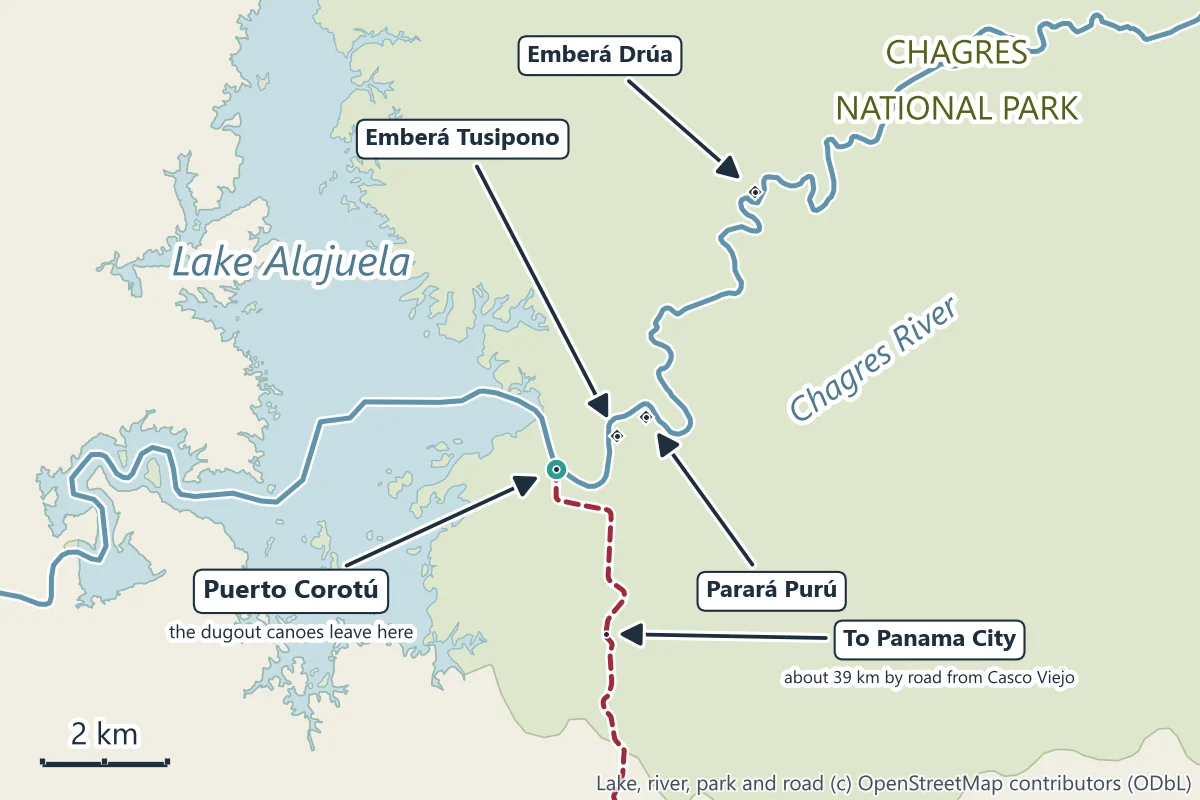
The calendar above is Panamá: Embera Village Tour and Waterfall with lunch, Jhaline Tours’ six hours: the canoe from Puerto Corotú, an hour at a waterfall, then three hours at Emberá Tusipono, with rain ponchos provided.
Who the Embera are
The Embera are one of Panama’s seven Indigenous peoples. In the 2023 census, 51,657 people identified as Embera, the third-largest Indigenous group after the Ngäbe and the Guna. They speak their own language, Embera, and share much of their history with their neighbours the Wounaan; their territory, the Comarca Emberá, was created in Darién, near the Colombian border, in 1983. Most Embera live outside it.
The villages the tours visit are on the Chagres River, inside Chagres National Park. Families from Darién began settling here in the 1970s; a University of Panama study records that they left the border region because of smuggling, guerrilla activity and insecurity. When the park was created in 1984, it limited farming and logging, and the communities, with support from Panama’s tourism institute and the World Bank in 1996, turned to receiving visitors. Their request for a collective title to the land, which they call Ejua So, was still waiting in 2025 for MiAmbiente’s approval, because it lies in a protected area.
What happens on the visit
The order changes from tour to tour, but the afternoon usually runs like this:
- The welcome. Music as the canoe lands, sometimes a short climb up steps from the riverbank into the village.
- The talk. A leader or a guide from the community explains Embera life on the river: the families, the governance, the medicinal plants, the crafts. The leader of a community is the noko.
- Lunch. Fried fish, usually tilapia, or chicken, with patacones and fruit, often served on a banana leaf.
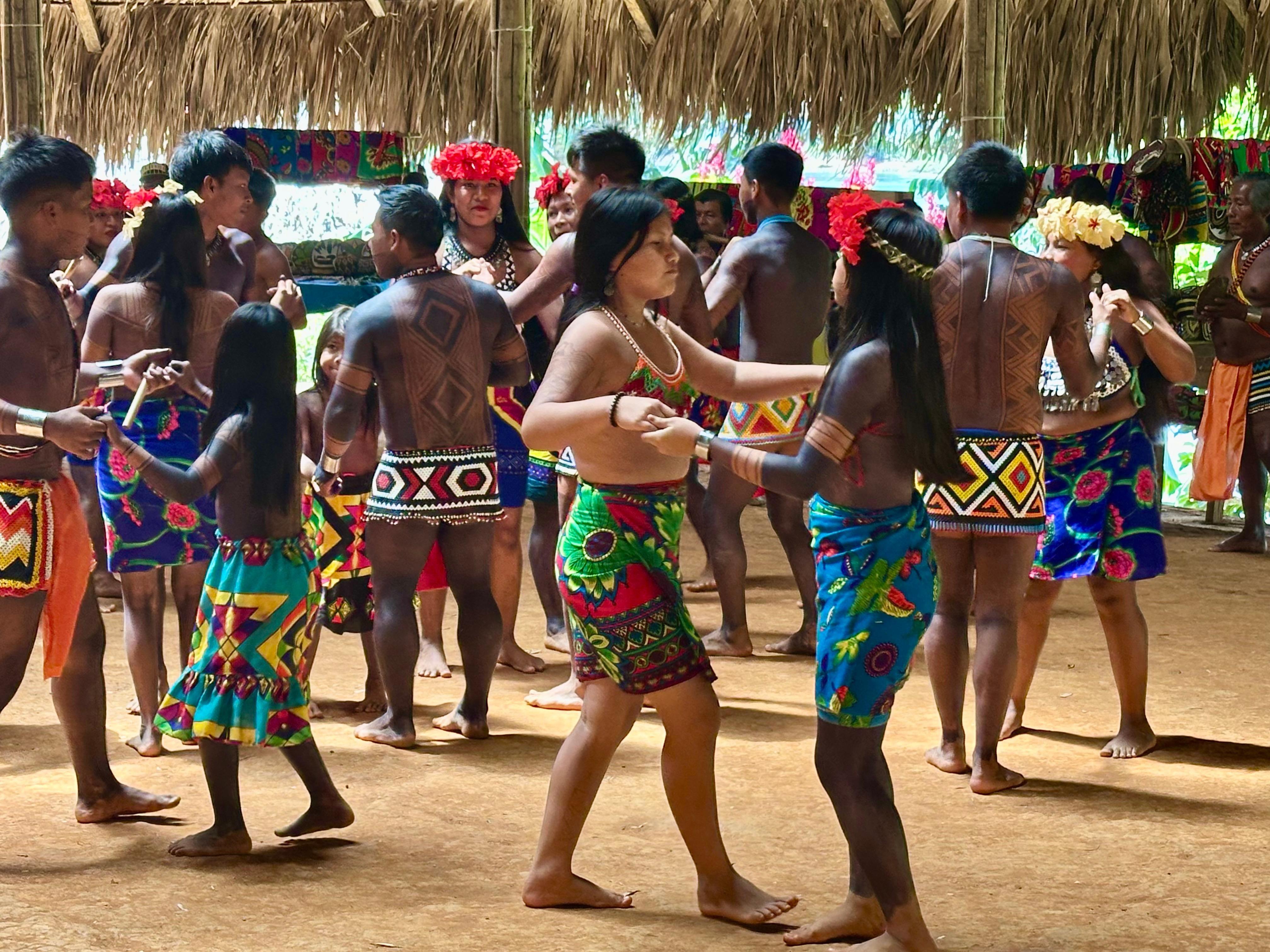
- Dances. The community dances in traditional dress to its own music, and visitors are often invited in.
- Crafts and jagua. Free time at the families’ tables and with the young painters.
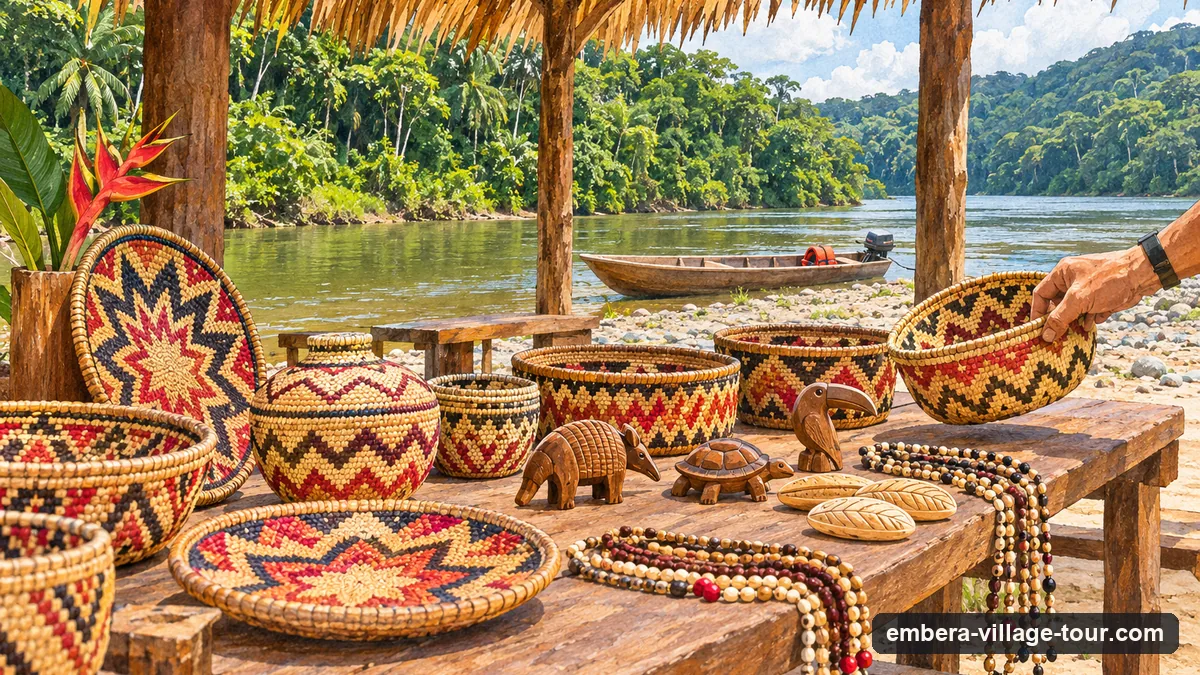
The crafts. Baskets and plates woven from chunga and nahuala palm fibre and coloured with natural dyes; animal carvings in cocobolo wood and in tagua, a palm seed known as vegetable ivory; bead necklaces. The carvings use only fallen or very old trees (Panama’s tourism authority).
The clothing. Women wear the paruma, a wrap skirt of brightly printed cloth, once made from tree fibre.
Jagua. A natural dye from the seed of the jagua fruit, painted on as temporary designs full of meaning; it also works as a natural sunblock (Panama’s tourism authority). Painters quoted in the Panamanian press say a design lasts about a week to ten days, so think about where you put it.
Where the money goes
No community on the Chagres publishes its visitor terms, so the best evidence is a University of Panama study at Emberá Drúa, from fieldwork in 2019 and 2020:
- A cooperative with its own board and treasurer manages the money from visits. It received about US$20 to US$25 per visitor from the tour operators, against tour prices of US$70 to US$150, and used it to pay some 60 community members who work the visits.
- Crafts belong to each family: the money from a family’s table is theirs.
- Jagua painting goes to the young painters, from about US$3 a design.
So the community’s share of your day comes through the cash fee and through what you buy: a basket or a carving puts money directly in a family’s hands. For the families who run these visits, tourism is their only income (Panama’s tourism authority).
Taking photos
No community publishes photo rules. Tao Travel 365 asks its guests to ask before photographing residents, and that is a fair rule everywhere: the dances are a performance you are welcome to photograph; a family’s home is not.
A community that books directly
If you would rather deal with a community yourself, Emberá Querá, on the shore of Gatun Lake in Colón province rather than on the Chagres, publishes its own day visit: about four to five hours from 9 am, with the boat, lunch, music, a talk, a plant walk and dances, booked two days ahead and paid to the community directly. It does not include road transport or jagua.
Pick your village day
The Emberá Tusipono Community and a Jungle Waterfall
Jhaline Tours: three hours at Emberá Tusipono, a waterfall on the way, ponchos provided; US$35 in cash.
Check dates →The Embera Drua Community, a Canoe Ride and a Hidden Waterfall
Jose Acevedo: the canoe, a 20-minute walk to a waterfall, then three hours at Emberá Drúa; US$30 community fee.
See the Drúa day →Embera Village, Waterfall and Lunch from Panama City
The village and waterfall day: lunch, dances and body paint in the price; five hours from Panama City.
See the village day →Prices, ratings and review counts from the listings (GetYourGuide checked November 2026). Operators price by date and season, so treat the figures as the shape of the market, not a quote.
What to bring covers cash, clothes and the jagua, and the waterfall tour the swim on the way.
More Tours with Open Dates
More Embera Village Tours with Open Dates
Day trips from Panama City to the Embera communities on the Chagres, with live availability. Times and cancellation terms are on each listing.
A Day with the Emberá Tusipono Community
Jhaline Tours: the canoe from Puerto Corotú, a waterfall, then three hours at Emberá Tusipono with crafts, music and lunch.
Check dates